F-5A Freedom Fighter
The original single-seat production fighter established the family’s light, economical approach and served with many allied air forces.
Documenting the Freedom Fighter and Tiger II through sourced aircraft records, variant histories and practical identification notes.
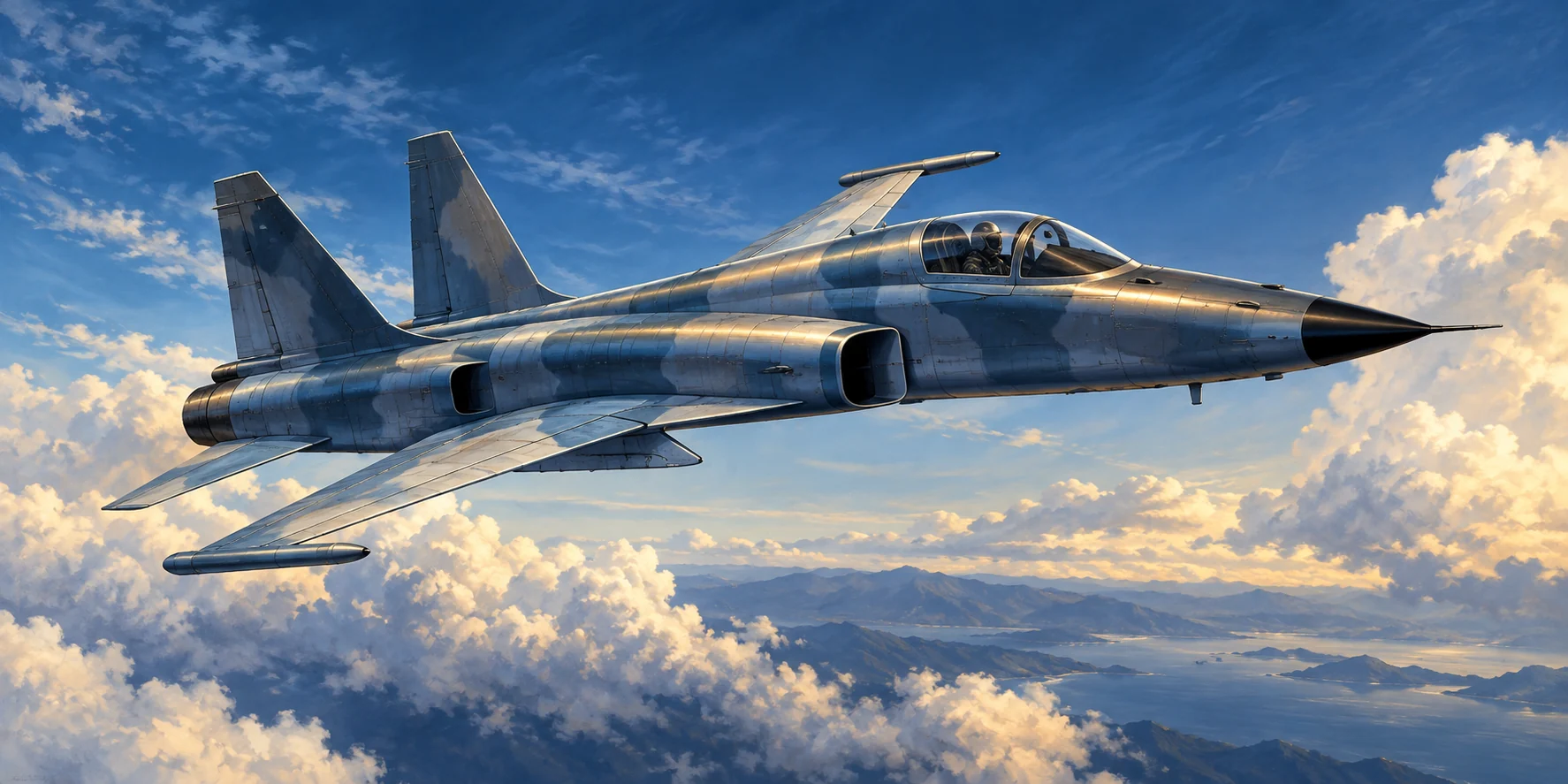 F-5 Tiger II · Original illustration
Northrop developed the F-5 as a light, practical supersonic fighter. Its compact size, twin engines, and straightforward design helped it serve with air forces across the globe. The later Tiger II brought a larger wing, more powerful engines, and improved avionics while keeping the family’s unmistakable silhouette.
Follow the F-5 from the early Freedom Fighter pair to the Tiger II and its later Navy service.
The original single-seat production fighter established the family’s light, economical approach and served with many allied air forces.
The two-seat early-family aircraft used for training while retaining combat capability.
The best-known version, with stronger engines, a revised airframe, and improved systems. Its sharp profile remains instantly recognizable.
A two-seat member of the Tiger II family used for conversion and training while retaining the character of the single-seat jet.
A later single-seat Navy and Marine Corps adversary aircraft built from former Swiss F-5E airframes.
Follow the family from the early single-seat fighter to the Navy adversary fleet. Seat count separates each paired branch before wing-root and fuselage details refine the identification.
Compare the complete family or use the interactive identification tool.
From the first Freedom Fighter to later Navy adversary aircraft, follow the design changes and individual airframes that kept the F-5 in view.
Read the F-5 history
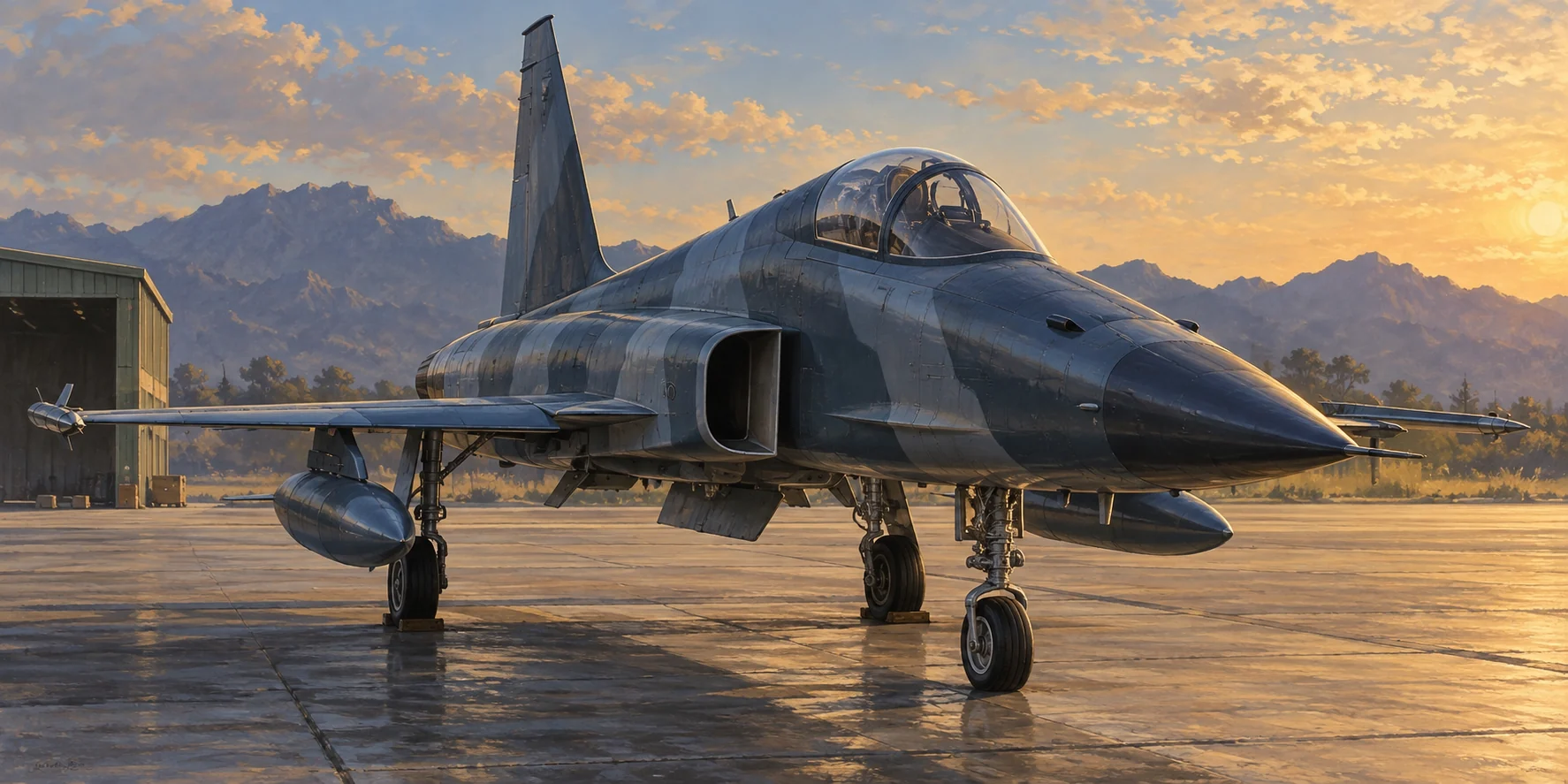
From training ranges to airshows, the F-5’s slender fuselage, paired intakes, and swept wings made it one of the most recognizable jet fighters of its era. This page celebrates that story through aircraft identification, service history, and the details that reward a closer look.