The museum identifies this F-5E and its displayed scheme. The scheme alone does not establish every unit assignment.
Identity
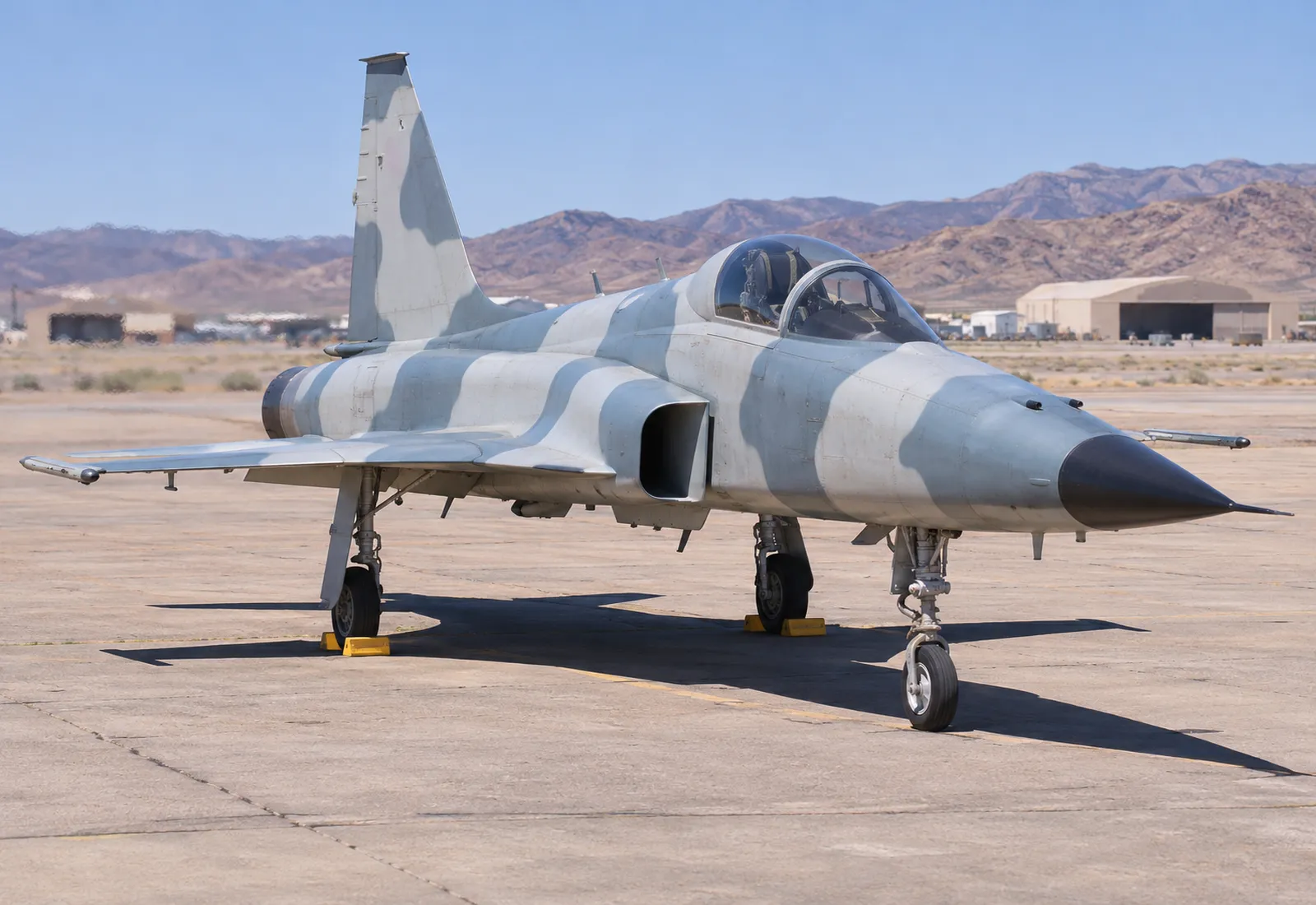
Pima identifies its Northrop F-5E Tiger II as serial 741564. Its museum page lists the single-seat aircraft's designation, serial number and displayed markings. [1]
Displayed markings
The museum lists Navy Composite Fighter Squadron 13 markings associated with Naval Air Station Fallon, Nevada, around 1996. That identifies the scheme shown in the museum record. The page does not provide a dated unit-by-unit service history for this individual airframe, so this record does not treat the display markings as proof of a full assignment history.
Open Pima's documented photograph beside our F-5E page. The photo is evidence for this airframe's displayed identity. The original illustrations on our home page are not.
More of its story
A report on the jet's arrival at Pima adds more detail. It says the aircraft was built for the U.S. Air Force as 74-01564 and flew with Air Force aggressor units, where at one point it became a commanding officer's aircraft. It later served with the Navy, and before reaching Pima it was on display at the Flying Leatherneck Aviation Museum near MCAS Miramar, on loan from the National Naval Aviation Museum. [2]
A neighbour at Pima
Pima also holds F-5B 72-0441, an early two-seat Freedom Fighter. Seeing the two together is the easiest way to learn the family: compare the F-5B's slimmer nose and smaller wing-root extensions with this Tiger II's, then check both against the Explore an F-5 diagram.
Last updated
Source and limits
[1] Pima Air and Space Museum | Northrop F-5E. [2] Vintage Aviation News | Pima Air Museum adds F-5E Tiger II. This record includes only details those two sources state about serial 741564.
How to read this record
Serial and operator records establish which aircraft this page follows.
Model, equipment and markings may change during one airframe's life.
Display or operating status is dated because aircraft can move.
A photographed paint scheme is supporting evidence, not proof of identity by itself.